As a professional manufacturer of precious metal recovery equipment, we often handle e-waste, PCB scraps and copper-containing materials. Understanding rolled copper foil and electrodeposited copper foil helps our clients better sort raw materials and maximize recovery benefits.
1. What is Electrodeposited Copper (ED Copper)
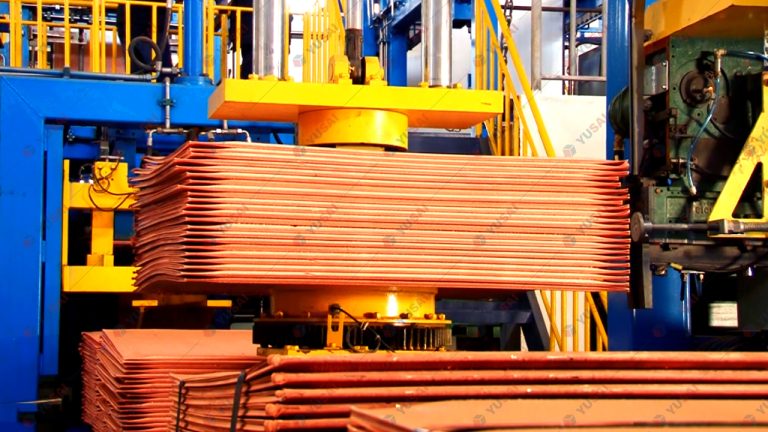
Electrodeposited copper is produced via electrolysis. Thick crude copper plates (99% Cu) act as the anode, while thin pure copper sheets serve as the cathode. The electrolyte is a mixed solution of sulfuric acid and copper sulfate.
When electric current passes through the solution, copper dissolves from the anode into copper ions, which migrate toward the cathode and gain electrons to precipitate as pure copper. Impurities more reactive than copper, such as iron and zinc, dissolve into ions but can be prevented from depositing on the cathode by adjusting the potential difference. Less reactive precious metals like gold and silver settle at the bottom of the electrolytic cell, forming anode sludge. Anode sludge is highly valuable, rich in gold and silver, and is a key feedstock for precious metal recycling.
Electrodeposited copper features high purity and is widely used in electrical products.
Applications of Electrodeposited Copper
It is widely used in electrical & electronics, light industry, machinery, construction and national defense industries.
- Electrical & electronics: cables, wires, motor & transformer windings, switches, printed circuit boards, accounting for over half of total copper consumption.
- Machinery & transportation: industrial valves, fittings, instruments, sliding bearings, molds, heat exchangers and pumps.
- Chemical industry: vacuum devices, distillation kettles, brewing tanks.
- Construction: copper pipes, pipe fittings and decorative components.
2. What is Rolled Copper Foil (RA Copper Foil)
Rolled copper foil is ultra-thin copper material, measured in micrometers, normally ranging from 5μm to 135μm. Thinner and wider foil is much harder to manufacture. It is produced by physically rolling and stretching copper ingots.
Rolled copper foil delivers outstanding tensile strength, ductility, bending resistance, electroplating performance, good conductivity and excellent surface gloss. It serves as an irreplaceable base material for electronics, communication, IC, automotive and machinery industries.
Main Properties of Rolled Copper Foil
- High adhesion to active materials
- Excellent tensile strength
- High elongation rate
- Available in a wide range of micrometer thicknesses
It has low surface oxygen content and can bond with various substrates including metals and insulating materials, working within a broad temperature range. Typical uses include electromagnetic shielding and anti-static solutions. When laminated onto base materials, rolled copper foil achieves reliable conductivity and shielding performance. It can be categorized into self-adhesive copper foil, double-conductive copper foil and single-conductive copper foil.
Electronic-grade copper foil (purity ≥99.7%, thickness 5μm–105μm) is a fundamental raw material for the electronics sector. It is applied in computers, communication devices, lithium-ion batteries, televisions, copiers, air conditioners, automotive electronics and game consoles. Global demand for high-performance electronic copper foil keeps rising.
3. Core Differences Between Rolled Copper Foil and Electrodeposited Copper Foil
表格
| Comparison Item | Rolled Copper Foil | Electrodeposited Copper Foil |
|---|---|---|
| Color | Yellowish tone | Reddish tone |
| Manufacturing Process | Copper ingots are rolled, followed by annealing, anti-oxidation and roughening treatment. Production is technically difficult. Elongation can exceed 30%. | Electroplating / electrodeposition. Copper ions precipitate from copper sulfate solution. The best SHTE type reaches only 15%-20% elongation. |
| Crystal & Molecular Structure | Dense molecular arrangement, fibrous grain structure parallel to rolling direction, high flexibility. The thinner the foil, the better flexibility. | Looser molecular arrangement, vertical columnar grain structure, relatively brittle and easy to crack under repeated bending. |
| Mechanical & Electrical Performance | Superior bending resistance and ductility; ideal for products requiring frequent flexing. Slightly lower conductivity. | Excellent electrical conductivity; poorer bending fatigue resistance. |
| Typical Applications | Dynamic bending scenarios, such as camera modules in flip phones, flexible parts. | Printed circuit boards, FPC, laptops, tablets, printer shielding. |
| Price | Higher unit price | Lower unit price |
Closing Note
Copper foils from discarded electronics and PCBs contain recoverable copper, plus precious metals captured in electrolytic anode sludge. We are a professional manufacturer of precious metal recycling equipment, offering complete recycling systems for PCB, lithium battery, e-waste, copper sludge and anode sludge. Our equipment efficiently extracts copper, gold, silver and other valuable metals from copper foil scraps and electrolytic residues.
Contact us for reliable recycling machinery and process solutions to turn your copper waste into profitable resources.