
Precious Metal Refining Plant
— Turnkey Precious Metal Refining Plant
YuSai Precious Metal Refining Plant is a turnkey hydrometallurgical + electrolytic refining line that converts e-waste, anode slime, spent catalysts and jewellery scrap into high-purity gold, silver and platinum-group metals.One integrated plant covers the full chain — pyrometallurgical enrichment, controlled chemical dissolution (aqua regia / nitric acid / chlorination), selective separation (precipitation, solvent extraction with P204 / P507 / C272, ion exchange) and high-current-density electrolytic refining (Wohlwill for gold, Möbius for silver, conventional cells for copper). Overall metal recovery reaches 95%+, with final purities up to 99.99% for gold and silver and 99.95% for platinum, palladium and rhodium.Acid fumes, NOx and process water are treated inside the line, so the plant operates within a normal industrial environmental permit envelope.
Product Overview
Precious metals do not disappear when a product reaches end of life — they concentrate. A tonne of sorted printed circuit boards carries far more gold than a tonne of conventionally mined ore, and spent industrial catalysts, copper anode slime and jewellery sweeps are richer still. The bottleneck has never been the metal; it is the ability to dissolve it selectively, separate it cleanly and cast it back into a form the market will accept at full value.
YuSai Precious Metal Refining Plant is built around that bottleneck.
The plant takes mixed, low-grade and highly variable secondary materials and drives them through a staged sequence: physical pre-treatment and homogenisation, pyrometallurgical enrichment into a collector metal or dore alloy, chemical dissolution of the collected metals, selective separation of each metal from solution, and finally electrolytic refining to specification-grade purity. Each stage is designed to hand a cleaner, better-characterised feedstock to the next one — which is why recovery stays high even when the input material changes from batch to batch.
From feed material → through processing → to finished product:
- Feed material: e-waste and PCB scrap, copper and lead anode slime, spent automotive and petrochemical catalysts, karat gold and jewellery sweeps, plating sludges and spent electrolytes, photographic and X-ray film waste, precious-metal-bearing slags, drosses and superalloy scrap.
- Processing: crushing, milling and separation → incineration or pyrolysis with post-combustion → fluxed smelting and dore casting → aqua regia / nitric / chloride dissolution → precipitation, solvent extraction (P204 / P507 / C272) and ion exchange → Wohlwill gold electrolysis, Möbius silver electrolysis and copper electrorefining → re-refining loops for off-spec material.
- Finished product: gold 99.9%–99.99% (up to 99.999% on a dedicated high-purity circuit), silver 99.9%–99.99%, platinum / palladium / rhodium 99.95%, copper cathode 99.99%, plus recovered selenium and tellurium from anode-slime flows.
Every wet-chemical step is enclosed. Acid vapours pass through counter-current alkaline scrubbing towers, nitrogen oxides through a dedicated NOx abatement stage, and all process water through neutralisation, precipitation and ion-exchange polishing before discharge or reuse. The result is a refinery-grade capability that fits inside a standard industrial building and a standard environmental licence — not a chemistry experiment with a fume problem attached.
The plant is delivered as an engineered project, not a catalogue machine: the reactor train, cell configuration, reagent scheme and automation level are all selected against your specific material mix, target purity and reporting requirements. That is the core design principle — the flowsheet follows the feedstock, not the other way round.

Recovery Value Analysis
Why secondary precious-metal streams are worth refining in-house
- Concentration beats mining. Sorted printed circuit boards can grade 800–1,500 g of gold per tonne, and shredded computer PCBs typically assay in the region of 90 g Au and 400 g Ag per tonne— commonly quoted as 40–100× the gold concentration of conventionally mined ore. Refining recovered material is therefore a resource play, not a waste-disposal cost.
- The value stack is wider than gold and silver. A single refining line also unlocks palladium, platinum, rhodium, iridium and ruthenium, plus copper, nickel and tin as by-products, and — from anode-slime flows — selenium and tellurium. Metal that is not separated is metal that is sold at a discount.
- Copper anode slime is the highest-value routine feedstock. Copper electrorefining concentrates essentially all of the gold, silver and PGM content of the anode into the slime. Recovering it on site converts a by-product stream into a second revenue line.
- Refining fees are real margin. According to publicly available industry benchmarks, gold refining fees range from approximately $30 to $50 per ounce, whereas refining fees for platinum group metals range from $80 to $150 per ounce, reflecting the greater complexity of the separation processes involved for the latter. Bringing this stage of the process in-house allows a company to convert fees otherwise paid to external providers into internal profit and shorten the cash conversion cycle.
- Supply security is now a strategic argument. With global platinum-group metal reserves estimated at only around 69,000 tonnes, and precious-metal content in e-waste estimated in the range of 300 tonnes of gold per year globally, secondary resources have moved from a cost-avoidance topic to a supply-chain resilience topic for electronics, automotive, chemical and jewellery producers.
- Where value is usually lost — and how this plant prevents it. Incomplete dissolution leaves metal locked in residue; silver chloride occlusion in a straight aqua regia route traps silver with the gold; anode slime carried out of the electrolytic cells loses PGM; fume and dust losses escape through the exhaust; reagent drag-out contaminates downstream steps. The plant addresses each of these with staged re-refining loops, dedicated silver parting ahead of gold refining, closed slime-collection circuits at every cell, counter-current gas scrubbing with dust recovery, and demineralised water with controlled reagent dosing.
- Regulatory tailwind. EU WEEE and EU Battery Regulation obligations, together with tightening restrictions on informal refining, are pushing recoverable volumes toward compliant, documented processors. A plant with in-line emission control and full batch traceability is positioned on the right side of that shift.
Applicable Materials
E-waste and electronic scrap. Feed material: PCB and PCBA boards, CPU and GPU chips, RAM modules, connectors, MLCC components, mobile-phone boards, IC chips and cable ends. Processing: pyrometallurgical enrichment into a copper collector, aqua regia dissolution, then selective precipitation of the individual metals. Finished product: gold, silver, palladium and copper.
Anode slime. Feed material: copper anode slime, lead anode slime, and zinc and nickel refinery slime. Processing: copper leaching, telluride recovery, fluxed smelting and converting, followed by electrolytic refining of silver, gold and the platinum-group metals. Finished product: gold, silver, platinum, palladium, selenium, tellurium and copper cathode.
Spent catalysts. Feed material: automotive three-way catalysts, petroleum reforming catalysts, and chemical and pharmaceutical process catalysts. Processing: roasting and smelting to concentrate the platinum-group metals, chlorination, then multistage solvent extraction with P204 / P507 / C272 and ion exchange for final separation. Finished product: platinum, palladium and rhodium at 99.95%.
Jewellery and goldsmith scrap. Feed material: karat gold, polishing dust and sweeps, bench filings, silver solder and plating barrels. Processing: inquartation followed by nitric acid parting or aqua regia dissolution, then electrolytic refining. Finished product: gold at 99.9%–99.99% and refined silver.
Plating and surface-finishing waste. Feed material: spent electroplating electrolytes, ion-exchange resins, filter-press sludges and stripping solutions. Processing: chemical dissolution, electrowinning and re-refining of the recovered metal. Finished product: gold, silver, palladium and nickel.
Photographic and medical imaging waste. Feed material: X-ray film, photographic fixer and developing sludge. Processing: electrolytic silver recovery combined with chemical precipitation. Finished product: silver at 99.9% and above.
Industrial residues and alloys. Feed material: precious-metal-bearing slags, drosses, furnace dusts, spent electrodes and aerospace superalloy scrap. Processing: smelting followed by hydrometallurgical refining and electrolysis. Finished product: gold, silver, platinum, palladium, rhodium, iridium and ruthenium.
Materials outside this list are evaluated individually. A bench-scale dissolution and assay test determines whether the economics work before any equipment is quoted.
Main Equipment
Pre-treatment and sampling. Shredder, hammer mill and ball mill · screening and sieving units · magnetic separator · eddy-current separator · air separator · incinerator with integrated post-combustor · granulator for anode and alloy feed preparation · sampling and blending station.
Pyrometallurgical section. Tilting induction melting furnace for gold and silver · fluxed smelting furnace with automated flux dosing · cupellation furnace · dore bar and anode casting moulds (including multi-cavity moulds for silver anodes) · slag handling and metal recovery from slag.
Hydrometallurgical section. Chemical attack reactors in glass-lined enamel, PVDF and PTFE-lined construction · rotating drum reactors · enamelled jacketed reactors with temperature control · plating barrels · precipitators (including large-diameter gold/silver precipitation vessels) · wheeled vacuum filtration units · filter presses · gas-tight centrifuges and hot-air washing/drying centrifuges · thermostatic dryers · demineralised water units (RO and ion-exchange) · process chillers.
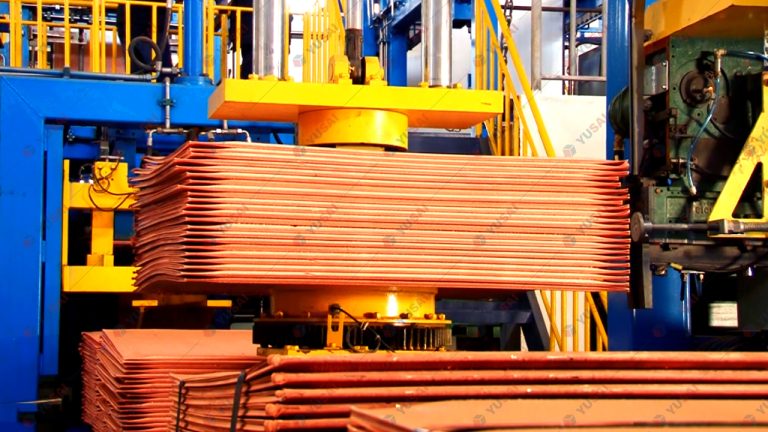
Electrolytic refining section Wohlwill. gold electrolytic cells (AuCl₄⁻ / HCl electrolyte) · Möbius silver electrolytic cells with anode moulds and electrolyte recycling tanks · copper electrorefining cells · high-current-density cell modules for volume throughput · stabilised rectifiers for gold, silver and copper circuits · insoluble titanium and nickel anodes · cathode sheets and starter blanks · busbar systems · electrolyte circulation, filtration and heating skids · anode slime collection and washing circuits.
Environmental control section. Counter-current multi-stage alkaline acid-fume scrubbing towers · dedicated NOx absorption / abatement unit · gas cyclones and plenum chambers for flue-dust capture · wastewater neutralisation and precipitation · ion-exchange and reverse-osmosis polishing · zero-liquid-discharge evaporation where required · dust collection and bag filtration · enclosed reagent storage and dosing with secondary containment.
Laboratory, control and utilities. XRF analyser · ICP-OES / AAS for trace-element verification · fire-assay setup for bullion · precision analytical balances · sample-preparation mill · PLC control cabinet with SCADA / HMI operator interface · automated reagent dosing · temperature, level and pH control loops · remote monitoring and data logging · batch traceability records for every lot.
Precious Metal Refining Plant Working Process
Step 1 — Material classification and pre-treatment. Incoming material is weighed, sampled and sorted. Components are dismantled where manual separation adds value; the balance is shredded and milled to a uniform particle size, then passed through magnetic and eddy-current separation to strip ferrous and non-ferrous fractions. Organic content (plastics, laminate, resins) is removed by controlled incineration with an integrated post-combustor, or by pyrolysis where a lower-temperature route is preferred. The output is a homogenised, assayed concentrate.
Step 2 — Pyrometallurgical enrichment. The concentrate is smelted with a flux package (borax, silica, sodium carbonate) in an induction or smelting furnace. A collector metal — typically copper or lead — scavenges the precious metals and sinks beneath the slag. Slag is tapped off, cooled and re-checked for residual values. The collector alloy is then granulated or cast into dore bars / anodes, ready for the wet-chemical stage. Where the material is already a high-grade dore or alloy, this step is bypassed or reduced to remelting.
Step 3 — Chemical dissolution. The enriched metal is dissolved under controlled conditions. Gold and PGM-bearing material goes into aqua regia; silver-rich alloys go through inquartation followed by nitric acid parting to avoid the silver-chloride interference that complicates a straight aqua regia route; chloride and selective-leaching routes are used where the material chemistry favours them. Reactors are jacketed and agitated, with reagent addition, temperature and off-gas all monitored. Fumes generated here are the primary load on the scrubbing system.
Step 4 — Selective separation. Each metal is isolated from solution in sequence. Gold is precipitated selectively (sulfur dioxide, sodium metabisulfite, oxalic acid or ferrous sulfate reduction) and filtered as a high-purity sponge or powder. Silver is recovered from nitrate solution by chloride precipitation followed by reduction, or directly by electrolysis. Platinum-group metals are separated by multistage solvent extraction using P204 / P507 / C272 and by ion exchange, with selective precipitation used for final isolation of platinum, palladium and rhodium. Reagents are regenerated and recycled wherever the chemistry allows.
Step 5 — Electrolytic refining. For specification-grade output, precipitated or dore metal is cast into anodes and refined electrolytically. Gold anodes are refined in Wohlwill cells with a gold-chloride (AuCl₄⁻) electrolyte to 99.99%, with a dedicated high-purity circuit available for 99.999%. Silver anodes are refined in Möbius cells with a silver-nitrate electrolyte to 99.99%. In anode-slime flows, copper is electrorefined first, and the slime released from the anodes is collected and routed back into the precious-metal line. Anode slimes from the gold and silver cells — which concentrate the platinum-group metals — are collected and re-treated, not discarded.
Step 6 — Re-refining loops. Off-spec material, cell residues, filter cakes, precipitator bottoms and slag do not leave the plant as waste by default. Each stream is assayed and returned to the point in the flowsheet where its metal content can be recovered at the lowest remaining cost. This recirculation discipline is the main reason overall recovery holds at 95%+ across variable feedstock.
Step 7 — Melting, casting and final assay. Refined metal is melted under controlled atmosphere in an induction furnace, then cast into the form the customer requires — bars and ingots, granules or grains, and for some applications powder. Every lot is assayed by fire assay, XRF or ICP-OES before release, and the certificate of analysis is issued against the batch number.
Step 8 — Environmental treatment (continuous, all steps). Acid vapour from dissolution and electrolysis is drawn through counter-current alkaline scrubbers. Nitrogen oxides from nitric digestions pass through the dedicated NOx abatement stage. Process water is neutralised, precipitated and polished by ion exchange or reverse osmosis, then returned to the circuit or discharged to specification. Flue dust and scrubber solids are recovered as a metal-bearing stream rather than disposed of. The plant is designed to run as a closed-loop system, with a cyanide-free process option available for customers who cannot hold cyanide on site.

Product Features
- Full-chain, single-vendor plant. Pre-treatment, smelting, hydrometallurgy, electrolysis and environmental control are engineered as one flowsheet with matched capacities — not assembled from third-party modules that were never designed to sit together.
- Gold, silver and PGM in one line. The plant is designed to recover and separate all of the metals in the feed, including platinum, palladium and rhodium from spent catalysts and anode slime, rather than treating them as contaminants.
- LBMA-aligned output grades. Standard product is gold and silver at 99.9%–99.99% and PGM at 99.95%, with a dedicated high-purity circuit for gold up to 99.999%.
- Cyanide-free option. The hydrometallurgical route does not require cyanidation, and a fully cyanide-free configuration is available — a decisive factor in jurisdictions with tight controls on cyanide storage and handling.
- Closed-loop reagents and water. Solvent extraction reagents (P204 / P507 / C272) are regenerated, acid and nitrate streams are recovered where the chemistry permits, and process water is polished and reused. Lower reagent consumption per ounce refined.
- Enclosed chemistry, engineered emission control. Counter-current acid-fume scrubbing, dedicated NOx abatement, flue-dust capture and wastewater polishing are part of the standard scope — not optional extras added after a permit objection.
- Anode-slime recovery built in. Slime collection circuits at every electrolytic cell route the highest-value residual stream back to refining instead of letting it leave the site.
- Modular automation levels. Manual, semi-automatic and fully automatic (PLC + SCADA with remote monitoring) configurations, matched to your operator profile and labour model.
- Corrosion-engineered materials. Glass-lined enamel, PVDF, PTFE-lined and titanium wetted parts selected per stream — the difference between a plant that lasts decades and one that leaks in two.
- In-house assay and batch traceability. Every lot carries a sampled, assayed and documented material balance from intake to cast product.
Technical Parameters
| Parameter | Specification |
|---|---|
| Product name | Precious Metal Refining Plant (precious metal recovery and refining line) |
| Applicable metals | Gold (Au), silver (Ag), platinum (Pt), palladium (Pd), rhodium (Rh), iridium (Ir), ruthenium (Ru), copper (Cu), plus selenium (Se) and tellurium (Te) from anode-slime flows |
| Feed material forms | E-waste and PCB scrap, electronic components, anode slime, spent catalysts, karat gold and jewellery sweeps, plating sludge and spent electrolyte, X-ray and photographic film waste, slags, drosses, superalloy scrap |
| Process routes available | Pyrometallurgical enrichment (fluxed smelting, cupellation) · hydrometallurgical (aqua regia, nitric acid parting, inquartation, chlorination, selective leaching) · separation (selective precipitation, solvent extraction, ion exchange) · electrolytic refining (Wohlwill / Möbius / copper electrorefining, electrowinning) |
| Solvent extraction reagents | P204 (D2EHPA), P507 (PC-88A), C272 (Cyanex 272), plus TBP and amine-based extractants as required by the flowsheet |
| Electrolyte systems | Gold: AuCl₄⁻ / HCl (Wohlwill) · Silver: AgNO₃ / HNO₃ (Möbius) · Copper: CuSO₄ / H₂SO₄ |
| Overall metal recovery | 95%+ (typical, with staged re-refining loops; verified per feedstock by assay) |
| Achievable purity — gold | 99.9% standard · 99.99% electrolytic · up to 99.999% on dedicated high-purity circuit |
| Achievable purity — silver | 99.9% standard · 99.95%–99.99% electrolytic |
| Achievable purity — PGM | Platinum, palladium and rhodium to 99.95% |
| Achievable purity — copper | 99.99% cathode (LME Grade A aligned) |
| Automation levels | Manual (basic operation) · Semi-automatic (PLC-controlled cycles, manual material handling) · Fully automatic (PLC + SCADA, automated reagent dosing, remote monitoring and batch data logging) |
| Control functions | Reagent dosing, reactor temperature, pH, electrolyte circulation and current density, off-gas monitoring, batch traceability |
| Materials of construction | Glass-lined enamel, PVDF, PTFE-lined steel, polypropylene, titanium and stainless steel, selected per process stream |
| Heating and cooling | Jacketed reactors with thermal-fluid or electric heating · process chillers · thermostatic drying units |
| Water treatment | Demineralised water generation (RO / ion exchange) · process-water neutralisation and precipitation · ion-exchange and RO polishing · zero-liquid-discharge option |
| Emission control | Counter-current multi-stage alkaline acid-fume scrubbing · dedicated NOx abatement · cyclone and plenum-chamber flue-dust capture · bag filtration |
| Cyanide | Not required; fully cyanide-free configuration available |
| Scale and configuration | Modular and engineered to order — pilot, mid-scale and industrial throughput matched to your material mix and purity target |
| Power supply | Configured to destination market (e.g. 380 V / 415 V / 440 V, 50 or 60 Hz, three-phase) |
| Installation | Skid-mounted and sectional design for containerised or flat-rack shipment; on-site assembly, alignment and commissioning by YuSai engineers |
| Standards referenced | Output grades aligned with LBMA Good Delivery purity expectations · copper cathode to LME Grade A · plant prepared for CE marking · REACH and EU WEEE compliance approach · documentation structured to support ISO 9001 / 14001 / 45001 management systems |
| Origin | Manufactured in Henan, China by Henan YuSai Precision Machinery Co., Ltd. |
| Warranty and support | Equipment warranty · installation and commissioning support · operator training · spare parts and remote technical assistance (terms confirmed in the commercial proposal) |
Core Advantages
- Designed around your feedstock, not a fixed catalogue. Reactor train, cell count, reagent scheme and automation level are all selected against a bench-scale test of your actual material — the flowsheet is a project decision, not a default.
- One vendor, whole chain. A single engineering team owns the mass balance from shredder to cast bar, which removes the interface risk that appears when smelting, chemistry and electrolysis are supplied by three different companies.
- PGM recovery is a design objective. Many gold-oriented lines treat platinum-group metals as an afterthought. Here they are a first-class product, with solvent extraction (P204 / P507 / C272), ion exchange and dedicated slime circuits built into the scope.
- Recovery held across variable feed. Staged re-refining loops and in-house assay keep the overall recovery at 95%+ even as the input material shifts between e-waste, slime and catalyst streams.
- Permit-ready environmental package. Multi-stage scrubbing, dedicated NOx abatement, dust capture and wastewater polishing are inside the standard scope, shortening the path from order to operating licence.
- Cyanide-free route available. Eliminates the storage, handling and public-acceptance burden that cyanidation imposes in many markets.
- Purity that clears market thresholds. 99.99% gold and silver and 99.95% PGM are the grades buyers, bullion markets and industrial users actually accept — not a laboratory maximum.
- Turnkey delivery with hands-on handover. Design, manufacture, export documentation, installation, commissioning, operator training and follow-up optimisation are one package, backed by remote monitoring after start-up.
- Built to be maintained. Corrosion-resistant materials of construction, modular cell and reactor design, and standard interchangeability of wear parts keep long-run availability high.
Service Process
Step 1 — Inquiry and material survey. Share your feed material type, estimated monthly volume, target metals and required purity. We confirm the applicable process route and flag anything that needs a test.
Step 2 — Sample testing and assay. Send a representative sample (a few kilograms is usually sufficient). YuSai performs dissolution and assay work to establish the real metal content and the achievable recovery for your specific material — this is the step that decides the flowsheet.
Step 3 — Process design and mass balance. Our engineers produce the flowchart, mass balance, reagent scheme, equipment list, utility requirements and layout drawing.
Step 4 — Proposal and commercial terms. Detailed quotation covering equipment scope, engineering, delivery terms, warranty and payment schedule, with the layout drawing for your site.
Step 5 — Manufacture and factory acceptance test. Fabrication and assembly in our Henan works. Incoming material inspection, in-process checks and a documented factory acceptance test before shipment, with video outgoing inspection available.
Step 6 — Shipment and export documentation. Sectional or skid-mounted preparation for container or flat-rack transport, with full export documentation and shipping coordination.
Step 7 — Installation, commissioning and training. YuSai engineers attend site for mechanical assembly, electrical and piping connection, wet commissioning and first production runs, then train your operators on normal operation, reagent handling, safety procedures and basic troubleshooting.
Step 8 — After-sales support and continuous optimisation. Spare-part supply, remote technical assistance, process fine-tuning as your feed mix evolves, and optional periodic production reviews to keep recovery and purity on target.
FAQ
What exactly does a precious metal refining plant do?
It takes precious-metal-bearing secondary materials and turns them into specification-grade metal. The process chain is physical pre-treatment → pyrometallurgical enrichment → chemical dissolution → selective separation → electrolytic refining → melting and casting, with environmental treatment running alongside every step. The output is cast gold, silver and platinum-group metal at the purity a buyer will accept.
Which metals can this plant recover and separate?
Gold, silver, platinum, palladium, rhodium, iridium and ruthenium, plus copper, nickel and tin as by-products and selenium and tellurium from anode-slime flows. Because the plant includes solvent extraction and ion exchange, the platinum-group metals are separated as individual products rather than recovered as a mixed concentrate.
What recovery rate and purity can I expect?
Typical overall recovery is 95%+ across the full chain, held at that level by staged re-refining loops and in-house assay. Achievable purity is 99.9%–99.99% for gold, 99.9%–99.99% for silver and 99.95% for platinum, palladium and rhodium, with gold up to 99.999% on a dedicated high-purity circuit. Actual figures are confirmed by bench test on your own material before the flowsheet is finalised.
What materials can I feed into it?
E-waste and PCB scrap, electronic components, copper and lead anode slime, spent automotive and petrochemical catalysts, karat gold and jewellery sweeps, plating sludges and spent electrolytes, X-ray and photographic film waste, precious-metal-bearing slags, drosses and superalloy scrap. If your material is not on this list, we test it rather than guess.
Does the process use cyanide?
No cyanide is required. The plant uses hydrometallurgical dissolution (aqua regia, nitric acid parting, chlorination) combined with solvent extraction and electrolysis, and a fully cyanide-free configuration is available.
What is the difference between the Wohlwill and Möbius processes in this plant?
Wohlwill electrolysis refines gold from cast anodes in a gold-chloride (AuCl₄⁻) electrolyte and produces the highest-purity gold product. Möbius electrolysis refines silver from cast anodes in a silver-nitrate electrolyte. Both are included in the line, with the anode slimes from each collected and re-treated because they concentrate the platinum-group metals.
How do you handle the acid fumes and nitrogen oxides?
Acid vapour is drawn through counter-current, multi-stage alkaline scrubbing towers. Nitric-acid digestions generate nitrogen oxides, which pass through a dedicated NOx abatement stage. Flue dust is captured by cyclones and plenum chambers rather than vented. Wastewater is neutralised, precipitated and polished by ion exchange or reverse osmosis before reuse or discharge, with a zero-liquid-discharge option.
What automation levels are available?
Three. A manual configuration with hands-on valve and temperature control for smaller operations and laboratories; a semi-automatic configuration with PLC-controlled cycles and manual material handling for mid-scale production; and a fully automatic configuration with PLC + SCADA, automated reagent dosing, remote monitoring and complete batch data logging for industrial-scale refining.
Do I need to send a sample before ordering?
Yes, and we prefer it. A representative sample of a few kilograms lets us run dissolution and assay tests, establish the real metal content and confirm the achievable recovery. Quoting a flowsheet without testing the material is how projects end up with the wrong equipment.
What kind of site does the plant need?
The plant is modular and sectional, so it suits a standard industrial building with appropriate chemical-handling containment, ventilation, power supply and waste-management provisions. Utility requirements are issued with the layout drawing during the design stage.
Can the plant handle material from different sources in the same line?
Yes — that is the normal operating case. The pre-treatment and enrichment stages homogenise the material, the assay step characterises each batch, and the re-refining loops route off-spec streams back to the appropriate point in the flowsheet. Recovery performance is quoted per feedstock category.
What does YuSai provide after delivery?
Installation and commissioning support with engineers on site, operator training covering normal operation, reagent handling and safety, spare-part supply, remote technical assistance, and process optimisation as your feed mix changes over time. Every unit is released against a documented factory acceptance test, with video outgoing inspection available before shipment.
Related Equipment And Product Lines
- E-Waste Recycling Plant — PCB dismantling, crushing and dry separation upstream of precious-metal recovery
- Copper Electrolytic Refining Plant — copper electrorefining cells producing LME Grade A cathode and precious-metal-bearing anode slime
- Silver Electrolytic Refining Equipment — Möbius silver cells with anode moulds and electrolyte recycling
- Precious Metal Extraction from Anode Sludge — dedicated flowsheet for copper and lead anode slime
- Pt / Pd / Rh Extraction for Spent Catalysts — solvent extraction and ion-exchange line for platinum-group metals
- Gold Refining and Extraction Equipment — Wohlwill electrolysis, aqua regia and inquartation modules
- Lithium Battery Recycling Plant — black-mass and hydrometallurgical recovery line
- Solar Panel Recycling Plant — PV module dismantling and material recovery
Henan YuSai Precision Machinery Co., Ltd. designs and manufactures recycling and refining equipment for e-waste, precious metals, lithium batteries and solar panels. Contact our engineering team with your feed material specification for a process assessment and quotation.

Get A Free Quote
Fill in the form below and our service team will get back to you within 24 hours with a recommended process flow and quotation.
- +86 18339216321
- info@yusaipreciousmetals.com
- Zhengzhou.Henan.China
If you be interested in our equipment and solutions, please to contact us.
- +86 18339216321
- info@yusaipreciousmetals.com
- zhengzhou.henan.china