Copper electrolytic refining is the standard industrial purification process to upgrade fire-refined crude copper into high-purity electrolytic copper, which meets strict requirements from electrical, electronics, new energy and other downstream sectors. Fire refining normally delivers crude copper with 99.0%–99.8% copper content, yet residual impurities cannot be removed by pyrometallurgy alone. Almost all crude copper produced globally goes through electrolytic refining for deep purification.
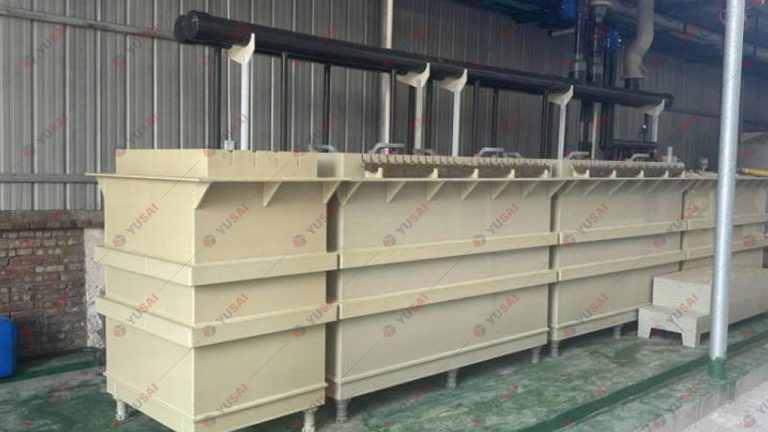
The refining cell assembly uses fire-cast crude copper as anodes and thin pure copper starter sheets (or reusable permanent titanium/stainless steel blanks) as cathodes. Anodes and cathodes are arranged alternately inside electrolytic cells. The working electrolyte is an aqueous solution of copper sulfate with free sulfuric acid. When direct current is applied, copper and base metals with more negative potential dissolve from the anode into the electrolyte. Noble metals plus selenium, tellurium and certain insoluble compounds do not dissolve and sink to the cell bottom as anode slime.
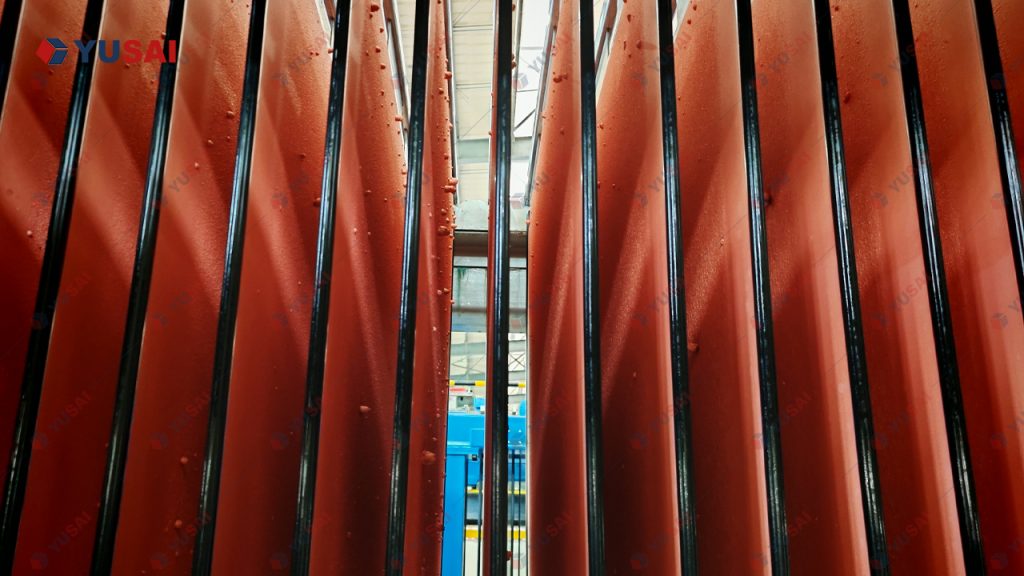
Copper ions are preferentially reduced and plated onto the cathode surface. Base metal ions with more negative reduction potentials remain dissolved in the electrolyte and will not co-deposit on cathodes under normal operating conditions. These accumulated base impurities are removed during regular electrolyte purification cycles. The copper collected on cathodes reaches ultra-high purity and is known as cathode copper or electrolytic copper.
Anode slime is a valuable by-product loaded with gold, silver, selenium, tellurium and platinum-group metals. Separate hydrometallurgical treatment of anode slime enables full recovery of these high-value rare and precious metals, improving the overall economic performance of the copper refining line.
As the cycle continues, base metal impurities build up inside the electrolyte. Excess impurities raise electrolyte viscosity, electrical resistance and density, slow anode slime sedimentation, and may trigger harmful co-deposition on cathodes, downgrading cathode copper quality. To maintain stable electrolysis, a fixed fraction of electrolyte is withdrawn for purification on schedule. During purification, copper, nickel and other valuable metals are recovered in sulfate forms, while regenerated sulfuric acid returns to the electrolytic loop for reuse. Continuous electrolyte circulation keeps ion concentration uniform across every cell. Heating units are installed in circulation pipelines to hold the electrolyte within the optimal temperature window. A commercial tankhouse contains hundreds to thousands of electrolytic cells wired in series under DC rectifier power supply.
Electrochemical Fundamentals of Copper Electrorefining
The core electrode reactions are copper dissolution at the anode and cupric ion deposition at the cathode.
- Anode main reaction: \(\boldsymbol{Cu – 2e^- \rightarrow Cu^{2+}}\)
- Cathode main reaction: \(\boldsymbol{Cu^{2+} + 2e^- \rightarrow Cu}\)
Side reactions involving cuprous ions (\(Cu^+\)) inevitably occur in real production. Cuprous copper forms equilibrium with cupric copper in sulfuric electrolyte. The equilibrium shifts toward \(Cu^+\) at higher temperature. Two major \(Cu^+\) consumption paths disrupt this balance: oxidation by dissolved oxygen to \(Cu^{2+}\), and disproportionation precipitation: \(\boldsymbol{Cu_2SO_4 = CuSO_4 + Cu}\). Fine copper powder generated from disproportionation mixes into anode slime, lowering precious metal grade and causing copper loss.
Hydrogen evolution and oxygen evolution are largely suppressed under standard operating conditions due to high overpotential. Hydrogen gas will only release at the cathode under severe concentration polarization with extreme low cupric concentration and excessive current density. Oxygen evolution at the anode rarely happens unless the anode surface is heavily passivated and cell voltage rises sharply.
For stable, high-efficiency operation, the preferred working envelope includes sufficient free sulfuric acid and cupric concentration in electrolyte, moderate temperature, properly high current density, and minimized air contact with electrolyte to restrain \(Cu^+\) side reactions.
Behaviour of Impurities inside Copper Anodes
Cast copper anodes are multi-element alloys. Impurities exist either as solid solutions inside the copper matrix or discrete intergranular inclusions. Their electrolytic behaviour depends primarily on electrode potential and solubility in acidic sulfate electrolyte. Impurities are grouped into four categories:
- Base metals with much more negative potential than copper: Zn, Fe, Co, Ni, Sn, Pb. Most dissolve into electrolyte; lead and tin mostly form insoluble salts/oxides and enter anode slime. They consume free sulfuric acid and raise electrolyte resistance.
- Noble metals with much more positive potential than copper: Au, Ag and platinum-group metals. They remain undissolved and report fully to anode slime.
- Elements with potentials close to copper but slightly negative: As, Sb, Bi. They drive slime transformation and can trigger cathode contamination if electrolyte control fails.
- Non-metallic impurities: oxygen, sulfur, selenium, tellurium, silicon. These form oxides, sulfides and selenides that shape anode passivation and slime characteristics.
Zinc is easy to remove in fire refining and normally appears at low levels in mineral-based anodes. Higher zinc content is often found in secondary/recycled copper anodes. Zinc dissolves completely into sulfate solution and does not plate out on cathodes, though it increases electrolyte density and viscosity.
Main Process Flow of Copper Electrolytic Refining
The conventional process chain covers anode preparation, starter sheet production, electrolysis, electrolyte purification and anode slime processing. Modern permanent cathode technology removes the starter-sheet fabrication step to cut labour and improve consistency.
In traditional tankhouses, starter sheets are produced in seed cells: crude copper anodes dissolve under DC current, and thin copper sheets deposit onto pure copper or titanium mother blanks. After stripping, flattening, embossing and hanger lug assembly, these starter sheets serve as cathodes in production cells. Inside production cells, copper continuously dissolves from cast anodes and plates onto starter sheets to form finished cathode copper.
Electrolyte purification loops continuously bleed and treat circulated electrolyte to control \(Cu^{2+}\), nickel, arsenic, antimony and bismuth concentrations, protecting cathode quality and stabilising current efficiency.
Key Advantages of This Copper Refining Route
- Produces LME-grade high-purity cathode copper for electrical conductors, busbars and electronic components
- Integrated recovery of precious metals and selenium/tellurium from anode slime
- Closed-loop sulfuric acid recycling to lower chemical consumption
- Adaptable for both primary smelter anodes and secondary recycled copper anodes
- Mature, controllable tankhouse parameters for consistent output and low impurity levels
If you need, I can also provide a shorter SEO condensed version for homepage introduction, plus a separate Chinese translation.