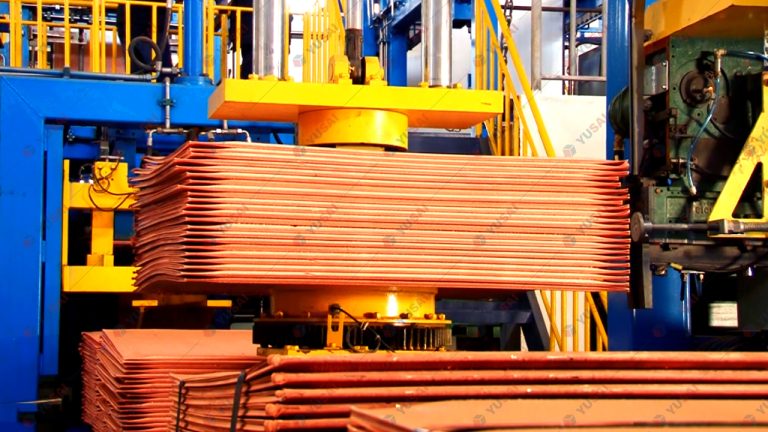
As a foundational material in modern industry, the advancement of electrolytic copper plate production technology directly impacts material performance and cost-effectiveness across sectors such as power, electronics, and construction. Driven by the dual imperatives of “dual-carbon” goals and intelligent manufacturing, the production of electrolytic copper plates has evolved from traditional, extensive processes toward precision-oriented and eco-friendly methods. This article analyzes the fundamental logic of electrolytic copper plate production through three dimensions: technical rationale, process innovation, and industry trends.
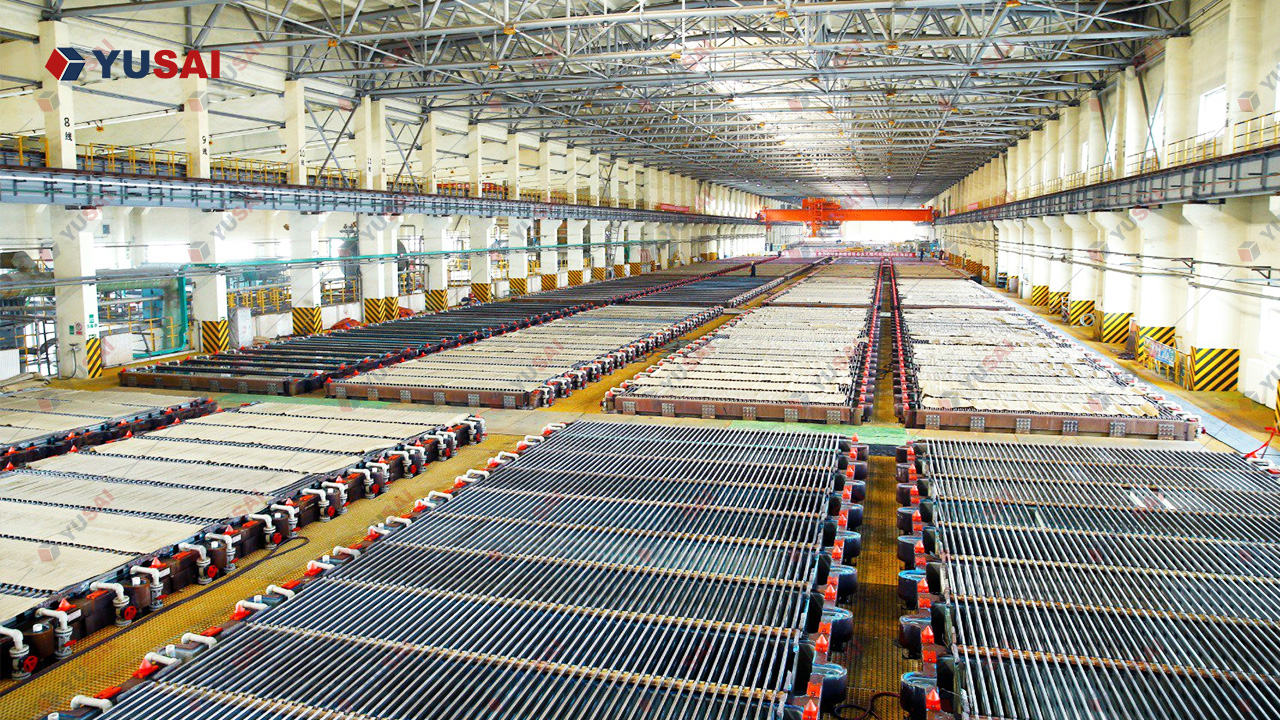
1. Raw Material Processing:
The core competitiveness of electrolytic copper plates stems from raw material purity. While traditional processes relied on cathode copper as anode plates, the global scarcity of copper resources has made the recycling of scrap copper a key area for technological breakthroughs. Modern production lines employ a three-step process—pretreatment, pyrometallurgical refining, and electrolytic refining—to transform scrap copper (with a copper content of only 60%–80%) into high-purity products exceeding 99.99% purity. Within this sequence, controlling oxidation and reduction during pyrometallurgical refining is critical; precise regulation of oxygen flow and flux ratios enables the selective removal of impurities while preventing copper loss caused by over-oxidation.
Upgrading the electrolyte circulation system represents another technical highlight. Traditional copper sulfate solutions often suffer from reduced electrolytic efficiency due to impurity accumulation; in contrast, modern closed-loop systems utilize ion-exchange membranes and online monitoring technology to filter out harmful elements like arsenic and antimony in real-time, extending the electrolyte’s service life by over 30%. This “clean production” model not only reduces waste liquid discharge but also boosts current efficiency to over 92%, directly lowering energy consumption per unit of output.
2. Electrolysis Process:
The physicochemical changes occurring within the electrolytic cell determine the final properties of the copper plate. Modern processes optimize current density distribution, overcoming the traditional trade-off where “high current density” equated to “low quality.” The use of specially shaped anodes and three-dimensional electrode structures improves electric field uniformity within the cell by 40%, ensuring the density and flatness of the deposited copper layer even at current densities reaching 300 A/m².
Grain growth control technology constitutes a core proprietary secret in the production of high-end copper plates. By introducing trace amounts of organic additives (such as gelatin or thiourea), copper ions can be induced to form a vertically oriented columnar crystal structure on the cathode surface. This microstructure imparts excellent ductility and electrical conductivity to the copper sheets, making them indispensable for high-end applications such as high-frequency circuit boards and lithium-ion battery current collectors.
3. Post-processing:
After emerging from the electrolytic bath, the copper sheets undergo multiple post-processing steps to stabilize their properties. Traditional workflows—comprising pickling, polishing, and shearing—can no longer meet the demands of precision manufacturing; the industry is rapidly shifting toward an “in-line inspection plus intelligent correction” model. Laser scanning systems monitor surface flatness in real time, and when combined with robotic arms capable of localized grinding, they allow for thickness tolerances to be controlled within ±0.01 mm. Notably, the widespread adoption of vacuum annealing has enabled the elimination of 98% of internal stresses, significantly improving the yield rates of subsequent processing steps such as stamping and bending.
The evolution of electrolytic copper sheet production is, at its core, a history of collaborative innovation between materials science and engineering technology. Amidst intensifying resource constraints and environmental pressures, securing a leading position in the global copper processing industry requires continuously pushing the technological boundaries of electrolysis efficiency, purity control, and energy management.