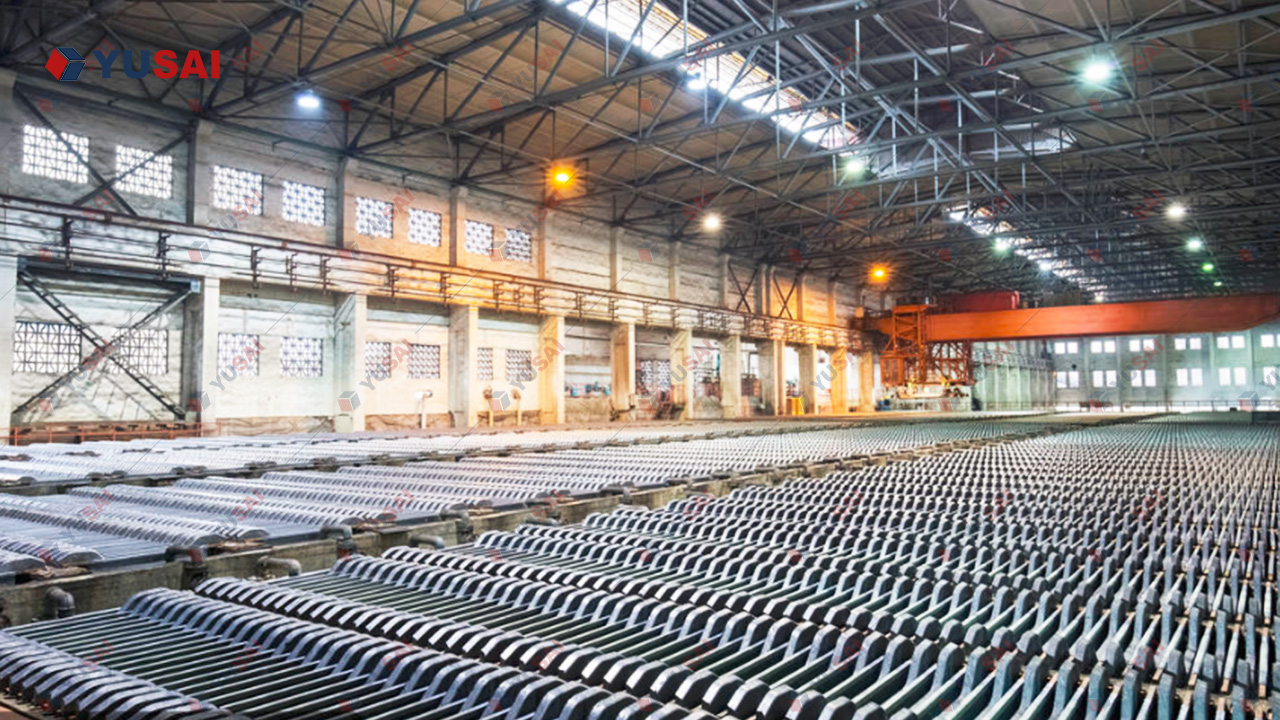
Electrometallurgy is a metallurgical technique that extracts metals by using an electric current to induce redox reactions in ores or compounds. The process takes place in an electrolytic cell consisting of positive and negative electrodes immersed in an ion-containing solution; positive ions gain electrons at the cathode to form metal, while negative ions lose electrons at the anode to become neutral substances.
The slurry electrolysis process is a type of hydrometallurgical technology. A US patent regarding copper electrowinning obtained by E. C. Brace in 1969 represents the early prototype of slurry electrolysis. This electrometallurgical technique is based on the electrolysis of iron ore and has reached a Technology Readiness Level (TRL) of 4.
Basic Definition
The slurry electrolysis process is a novel hydrometallurgical technique. Electrowinning is an innovative technology based on the electrolysis of iron ore.
Key Characteristics
Electrowinning utilizes an alkaline solution through which an electric current flows from an inert anode, causing iron particles to be reduced and deposited onto the cathode. The process can be powered by renewable energy, thereby reducing energy consumption and carbon emissions.
Applications
The slurry electrolysis process has been extensively researched for treating materials such as chalcopyrite, galena, complex silver concentrates, bismuth ores, and polymetallic sulfide ores; industrial-scale production has already been achieved for bismuth ores, complex silver concentrates, and gold concentrates.
Electrowinning is an innovative technology based on iron ore electrolysis that can directly separate iron and oxygen from the ore; it can be powered by renewable energy and offers reductions in energy consumption and carbon emissions.
Impact
The slurry electrolysis process offers the advantages of low energy consumption, as well as benefits in metal separation and environmental pollution prevention. Powered by renewable energy, this technology significantly reduces energy consumption and carbon emissions; compared to traditional iron and steel manufacturing processes, it can cut carbon emissions by 87% and direct energy consumption by 31%. Related Research
Future development directions for slurry electrolysis technology include: further investigating its application to low- and medium-grade complex polymetallic ores; improving current efficiency to reduce energy consumption; developing high-efficiency, industrial-scale electrolysis equipment and high-performance selective membranes; conducting research on slurry electrolysis as a pretreatment method for refractory ores; exploring new slurry electrolysis processes using neutral or alkaline media; and expanding its application into the environmental protection sector.
Driven by carbon neutrality goals, electrowinning technology—specifically a breakthrough innovation based on iron ore electrolysis—has garnered significant attention. This technology integrates steelmaking with electrochemical processes to directly separate iron and oxygen from iron ore; when powered by renewable energy, it can drastically reduce both carbon emissions and energy consumption. After years of development, ArcelorMittal has advanced the technology to a significant level of maturity and is currently collaborating with various European research institutions to drive it toward a higher stage of commercial readiness.